

MAGGOTS AND MURDER - How Insects Aid Death Investigations
Downloads an .ics file · Times are in Europe/London · Google Calendar
MAGGOTS AND MURDER
Biomedical Entomology at the
Crime Scene
A Salon in the Cemetery
with Martin
Hall
As part of the London Month of
the Dead
The crucial
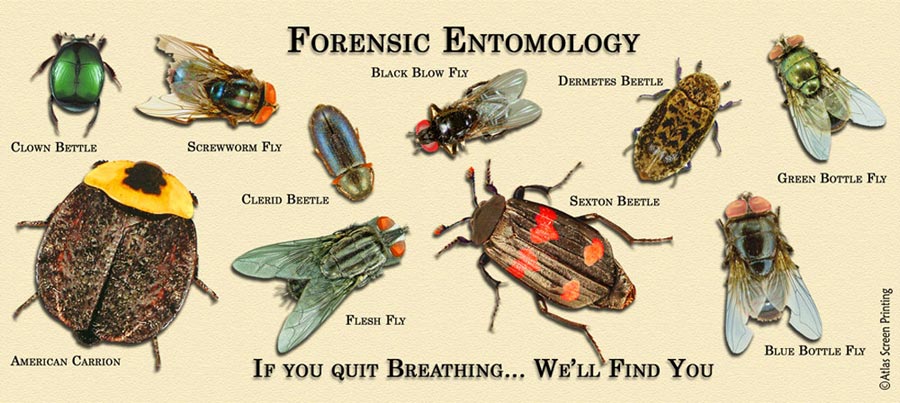
evidence at a murder trial can often be provided not by human
witnesses, but by insects. Insects are ubiquitous in nature and so
are regularly encountered at crime scenes, either as a natural part
of the environment or because they have been attracted there by a
dead body. This can help the forensic entomologist ascertain how
long the victim has been dead by assessing the degree to which
insects have colonised the corpse.
Martin
Hall will introduce the basics of the science, then take the
audience from the crime scene to the laboratory and finally to the
court room where the evidence is presented. He will end with a
discussion of the wider applications of biomedical entomology
beyond the criminal justice system.
MARTIN HALL
Martin Hall has worked as a
forensic entomologist on some 200 criminal cases during the past 25
years. He is author or co-author of more than 140 peer-reviewed
scientific publications, many on the biology of blowflies, the
insects of primary evidential importance in forensic entomology.
His most recent research focuses on the use of micro-CT scanning
techniques to age developing blow flies within their puparia.
Martin was the founding President of the European Association for
Forensic Entomology (2002-2006) and he is on the Editorial Boards
of Medical and Veterinary
Entomology and Forensic Science
International.
More like this near London



Going to MAGGOTS AND MURDER? Ask me anything about it.
I read the organiser's pages and answer in a few seconds.
Answers are AI-generated · Privacy