

Shuke Xiao and Lun Wang
Downloads an .ics file · Times are in America/Los_Angeles · Google Calendar
Hey, how's it going? Shuke Xiao and Lun Wang looks like it should be pretty interesting. Want me to help you organise around it?
Event details
Tickets sold by events.stanford.edu
Price on the ticket page
Add to calendar · Downloads an .ics file · Times are in America/Los_Angeles · Google Calendar
Shuke XiaoPostdoc fellow, Stanford University
Long Lab
MCT6 Gates Gut-Derived Glycolytic Signals to Control Systemic FeedingBio
Dr. Xiao is currently an NIH K99/R00 postdoc fellow in Dr. Jonathan Long's lab at the Deparment of Pathology and ChEM-H institute at Stanford University. Dr. Xiao graduated from Nanjing University with a Bachelor degree in Biology, and pursued PhD at Yale University under the supervision of Dr. John Carlson. He has a broad interest in understanding the chemical languate of tissue crosstalk and the molecular machineries that connects cellular metabolism to organismal physiology.
Abstract
Metabolites are increasingly recognized as circulating signals that communicate cellular metabolic state across tissues, yet the mechanisms that couple intracellular production to organism-wide action remain poorly defined. Using the anorexigenic metabolite Lac-Phe as a tractable system, we show that the orphan gut-enriched transporter MCT6 (SLC16A5) is a physiologic Lac-Phe exporter that controls both metabolite release into the bloodstream and its downstream systemic effects. MCT6 transports Lac-Phe in vitro and is necessary and sufficient for cellular Lac-Phe efflux. Global or intestinal epithelial-specific deletion of MCT6 reduces metformin-inducible circulating Lac-Phe levels and confers resistance to metformin-associated weight loss on a high-fat diet. Bypassing the transport defect with exogenous Lac-Phe normalizes the body weight phenotype of MCT6-KO mice. These data deorphanize MCT6, connect gut lactate metabolism to metformin pharmacology, and establish metabolite release to blood as a checkpoint that determines whether an intracellular biochemical state is converted into a systemic signal.
Lun WangPostdoctoral Fellow, Stanford University
Schnitzer Lab
Dissecting Pathologic Circuits in Parkinson's Disease to Develop Cell-Type-Specific TherapeuticsBio
Dr. Lun Wang is a postdoctoral scholar in Professor Mark Schnitzer's lab at Stanford. His research focuses on neural circuits and the underlying structural and computational mechanisms that govern brain function in health and disease. Dr. Wang earned his PhD from Peking University before joining the Schnitzer lab. Over the past several years, he has led the development of TRU-FACT, a multimodal registration pipeline that integrates the functional activity, connectivity, and molecular identity of the same cells, and has applied it across a range of studies investigating how specific neuronal populations contribute to normal brain function and to disorders, including Parkinson’s disease.
Abstract
Understanding how the activity of individual neurons relates to their molecular identity and connectivity is central to uncovering the general principles that govern neural circuit function in health and disease. To address this challenge, we developed TRU-FACT (Total Registration Under Functional Activity, Connectivity, and Transcriptomics), a broadly applicable experimental and computational pipeline that enables routine, large-scale, and multimodal investigation of individual cells' in vivo dynamics and molecular content. TRU-FACT integrates an optomechanical alignment method that parallelizes specimen planes, a graph-theoretic method that registers individual cells, and a statistical framework that provides a probability of correct registration for each cell. In Parkinson's disease (PD), a motor disorder marked by circuit dysfunction, we used parkinsonian mice to characterize changes in neuronal activity and applied TRU-FACT to identify the underlying neuronal subtypes. We are also testing how targeted manipulation of these neuronal subtypes affects the parkinsonian mice. By linking neural dynamics to cell identity within the same cells, TRU-FACT provides a platform for discovering relevant cell types and targets for precision PD therapies.
About the SeriesThe first Monday of each month, the Knight Initiative for Brain Resilience will host monthly seminars to bring together awardees, affiliated professors and students for a series of talks. Two speakers will discuss their brain resilience research, experiences in the field, and answer questions about their work.
To support our researchers' participation, these seminars are not streamed/recorded and are only open to members of the Stanford community.
More like this near Palo Alto




Also on in Palo Alto
- Clark Center: Flu & COVID-19 Vaccination ClinicWed 7 Oct · 9am · Clark Center
- Volunteering at Stanford Educational Farm - WeekdayWed 7 Oct · 9am · O'Donohue Educational Farm
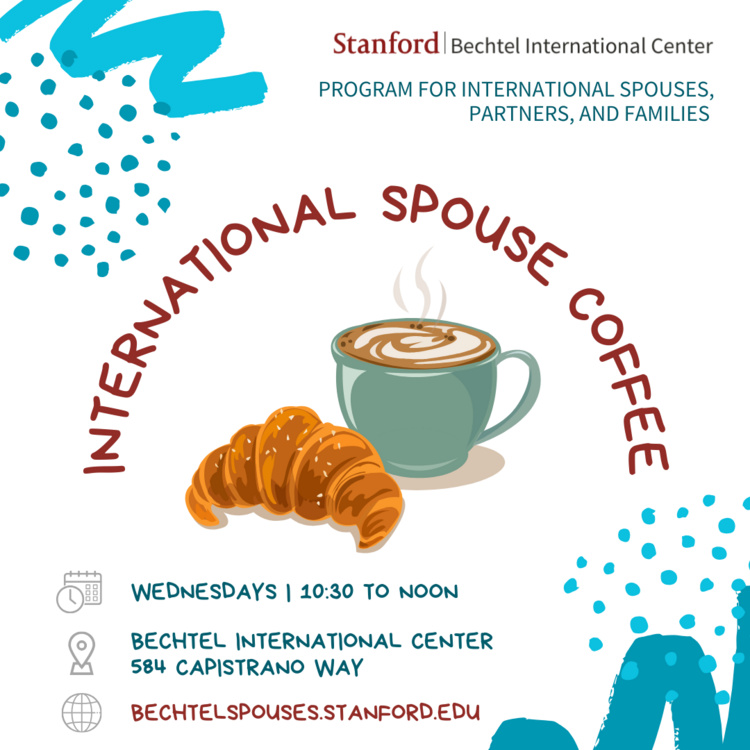
- International Spouse Coffee ☕️Wed 7 Oct · 10:30am · Bechtel International Center
- CMEMS: Jutta Eming presents, "Precious Monsters"Wed 7 Oct · 12pm · Building 260, Pigott Hall
- Distinguished Lecture Series Lunch Talk | Two Modes of Sedentism on the Tibetan PlateauWed 7 Oct · 12pm · Building 500, Archaeology Center
Going to Shuke Xiao and Lun Wang? Ask me anything about it.
I read the organiser's pages and answer in a few seconds.
Answers are AI-generated · Privacy