

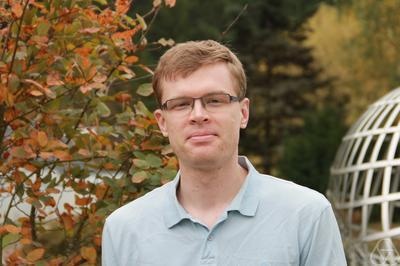
CAM Colloquium - October 16, 2026, Christian Kuehn "Mathematical Foundations of Early-Warning Signs"
Downloads an .ics file · Times are in America/New_York · Google Calendar
Hey, how's it going? CAM Colloquium looks like it should be pretty interesting. Want me to help you organise around it?
Event details
Tickets sold by events.cornell.edu
Price on the ticket page
Add to calendar · Downloads an .ics file · Times are in America/New_York · Google Calendar
Title: Mathematical Foundations of Early-Warning Signs
Abstract: Many complex systems exhibit abrupt qualitative changes, often referred to as critical transitions or tipping points. Examples range from climate subsystems such as the Atlantic Meridional Overturning Circulation (AMOC) to ecological, epidemiological, medical, and socio-economic systems. Anticipating such transitions is a major scientific challenge, particularly when only limited and noisy observations are available. This talk presents a mathematical framework for understanding and detecting early-warning signs of imminent critical transitions.
The first part introduces tipping points from the perspective of dynamical systems and bifurcation theory, emphasizing the role of fast-slow dynamics and stochastic perturbations. A central mechanism is critical slowing down, which manifests itself through characteristic scaling laws in statistical observables such as variances and covariances.
The second part discusses rigorous results for stochastic ordinary differential equations (SODEs). I will outline the classification of generic early-warning signals near codimension-one and codimension-two bifurcations and explain how covariance scaling can be derived analytically using Lyapunov equations, singular perturbation methods, and probabilistic techniques. Applications, limitations, and extensions to more complex stochastic dynamical phenomena will also be highlighted.
Bio: The research interests of Christian Kühn (b. 1981) lie at the interface of differential equations, dynamical systems and mathematical modelling. A key goal is to analyze multiscale problems and the effect of noise/uncertainty in various classes of ordinary, partial, and stochastic differential equations as well as in adaptive networks. The phenomena of central interest are: patterns, bifurcations and scaling laws. On a technical level, Kühn's work aims to build bridges between different areas of the study of dynamical systems.
After studying mathematics at Jacobs University Bremen (BSc 2005) and at the University of Cambridge (M.A.St. 2006), Kuehn received his PhD in Applied Mathematics from Cornell University in 2010. Subsequently he worked at the Max Planck Institute for the Physics of Complex Systems in Dresden as a postdoctoral researcher in the field of network dynamics. From 2011 to 2016 he was postdoctoral fellow at Vienna University of Technology in the Institute for Analysis and Scientific Computing and a Leibniz fellow at MFO in 2013. He is Lichtenberg Professor at TUM (starting 2016 as Assistant Professor and from 2022 Full Professor).
More like this near Ithaca




Also on in Ithaca
- Exploring the Ethics of AI in Community-Engaged LearningTue 13 Oct · 2pm · Gates Hall
- Protest Cornell UniversityTue 13 Oct · Ithaca, New York
- Regenerative Studio Fall 2026 EventsWed 14 Oct · Sibley Hall Room 106
- Instruction ResumesWed 14 Oct · Campus-wide
- New Faculty Teaching AcademyWed 14 Oct · 9:30am · CCC (Computing and Communications Center)
Going to CAM Colloquium? Ask me anything about it.
I read the organiser's pages and answer in a few seconds.
Answers are AI-generated · Privacy