

Workflow Frictions: Engaging Arabic Script Texts and Creating Baseline Data with OpenGulf
Downloads an .ics file · Times are in America/Los_Angeles · Google Calendar
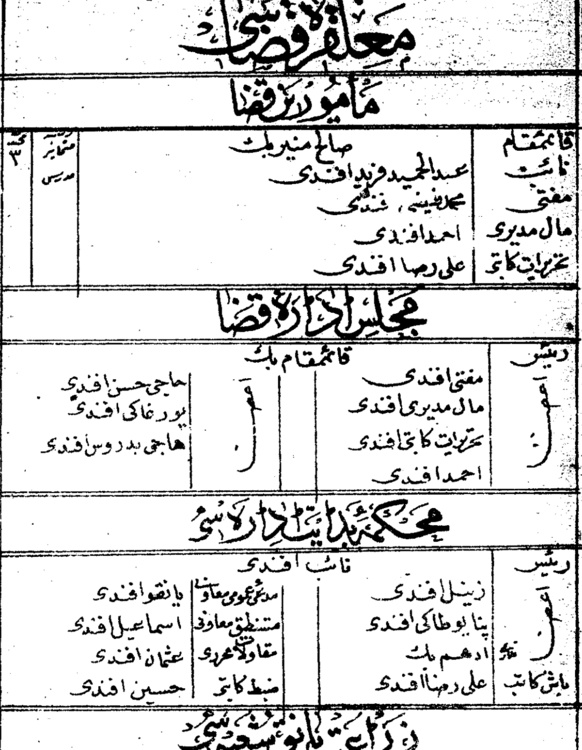
The OpenGulf research group creates and publishes baseline datasets to enable digital historical research on the Persian Gulf region, where archives are scattered and often dominated by British source material. Our work aims to link the Gulf to regional and global comparative and connective historical frameworks. The evolving set of methods of digital history has increasingly integrated machine learning and artificial intelligence. This talk argues that while working with source material in Arabic, Persian and Ottoman seems to be easier with AI-enhanced tools, their use raises important ethical questions and challenges. This talk will demonstrate how such methods have evolved in our work and suggest that these shifts demand a rethinking of professional practices in digital history and digital humanities, particularly regarding openness and transnational cooperation. The talk advocates for well-designed friction–the insertion of human evaluation, judgement and critical thinking–in AI-augmented digital humanities workflows, especially in team-based, student-inclusive environments.
About the Speaker
Nora Barakat is Assistant Professor of History at Stanford. Her scholarship engages the social, economic and legal histories of the region between Palestine and the Persian Gulf in the nineteenth and twentieth centuries, with a current focus on the intersections between Islamic law and the history of capitalism. Nora is co-founder of the OpenGulf research group, a multi-institutional set of projects exploring digital methods for the history of the Persian Gulf region based at NYU Abu Dhabi. OpenGulf has supported teams of students and faculty developing workflows to create historical datasets, maps and other visualizations and to support broader efforts to render historical Arabic-script material machine readable.
Lunch at 11:45 a.m. for in-person attendees
Register to join online
More like this near Palo Alto


Going to Workflow Frictions? Ask me anything about it.
I read the organiser's pages and answer in a few seconds.
Answers are AI-generated · Privacy