

Talk: "Women’s Elegies in Israel (Bedouin, Christian, Druze and Jewish Yemenite)" by Roni Henkin-Roitfarb
Thursday 29 October 2026
Start time not announced
MES Reading Room, Calhoun Hall (CAL) 516 ???? — University of Texas at Austin · Directions
Downloads an .ics file · All day · Google Calendar
Hey, how's it going? Talk looks like it should be pretty interesting. Want me to help you organise around it?
Event details
Tickets sold by calendar.utexas.edu
Price on the ticket page
Add to calendar · Downloads an .ics file · All day · Google Calendar
Elegies are highly appreciated as a ‘women’s genre’ in Arabic literature, but have always been frowned upon, especially by men, when accompanying women’s mourning practices, considered contradictory to orthodox religion. In a forthcoming article on women’s elegies in four Arabic-speaking communities in Israel my co-writer, Hamdih Abu Rabi’ah, and I begin with the Negev, where Bedouin women’s elegies are of two types: public and personal – but they are not exclusive and one may flow into the other in sequence. We analyse a personal elegy, as Hamdih’s grandmother mourned her deceased husband; and another that starts in the public mode, then shifts to the personal. Analysis shows the language of elegy in the Negev to differ considerably from spoken Negev Arabic: as a sub-genre of Bedouin (nabati) poetry, the Negev elegy displays distinct lexicon, grammar, prosody and motifs belonging to the poetic interdialect. Next, we conduct preliminary comparisons of these Negev elegies with women’s elegies and mourning practices in three other Arabic-speaking communities in Israel: North Palestinian (Galilean) Christian and Druze on the one hand and Jewish Yemenite on the other. Elegiac motifs shared in the four communities include the loss of a woman’s freedom upon the death of her male custodian, concern over conditions in the grave, and the wish to come and take care of the dear one. Each of the four traditions, however, also displays distinct stylistic features and motifs, due to differences in culture, customs, and religion. In all these communities, sadly, the elegiac tradition is waning, which makes its documentation all the more crucial and urgent. Roni Henkin is a Full Professor at the Department of Hebrew Language, Ben-Gurion University of the Negev. Two major tracks in her research are, on the one hand, the language and style of Negev Bedouin oral narrative and, on the other hand, contact between Hebrew and Arabic in Israel. In both, she focuses on gender-related and generational differences. Her book, Negev Arabic: Dialectal, Sociolinguistic and Stylistic Variation, was published by Harrassowitz Verlag in 2010 [ISBN: 978-3-447-06170-4]. Journals in which her articles appear include Anthropological Linguistics, Language and Communication, Pragmatics, and Journal of Pragmatics. This talk is a part of the Israel in Context Lecture Series. Register Here!
More like this near Austin
Also on in Austin
- Kacey MusgravesTue 6 Oct · Moody Center ATX
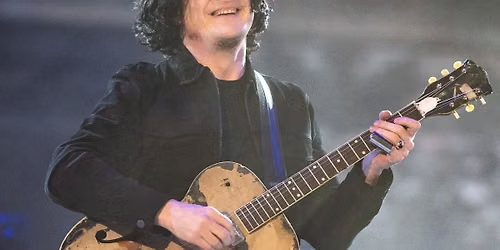
- Jack White - AustinTue 6 Oct · Moody Center ATX
- Jack White at Moody AmphitheaterTue 6 Oct · Moody Amphitheater
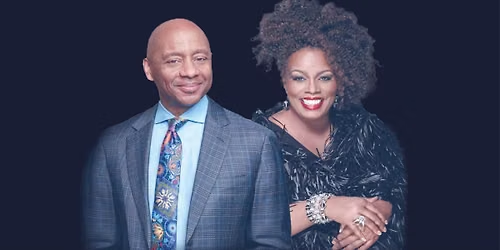
- Branford Marsalis and Dianne Reeves - Celebrate John Coltrane at Hogg Memorial AuditoriumTue 6 Oct · Hogg Memorial Auditorium
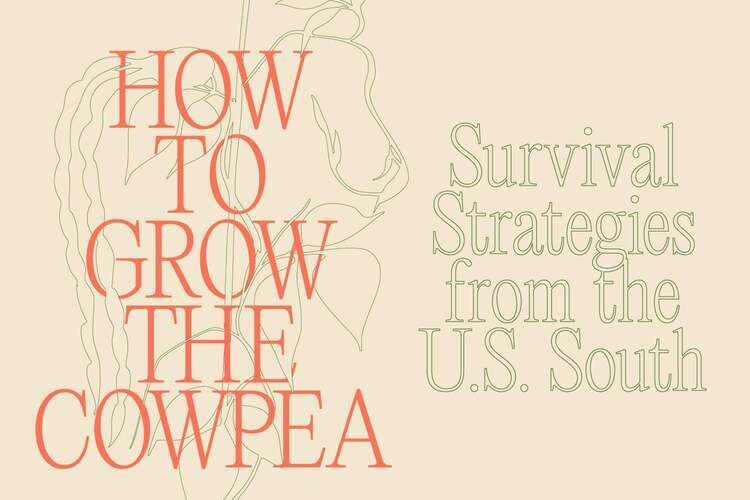
- How to Grow the Cowpea: Survival Strategies from the U.S. SouthWed 7 Oct · Visual Arts Center, Art Building (ART)
Going to Talk? Ask me anything about it.
I read the organiser's pages and answer in a few seconds.
Answers are AI-generated · Privacy