


FPGA-based hardware for quantum control and feedback
Hosted by Colorado Quantum
Downloads an .ics file · Times are in America/Denver · Google Calendar
Hey, how's it going? FPGA-based hardware for quantum control and feedback looks like it should be pretty interesting. Want me to help you organise around it?
Event details
Tickets sold by meetup.com
Add to calendar · Downloads an .ics file · Times are in America/Denver · Google Calendar
| Time | Activity |
| ---- | -------- |
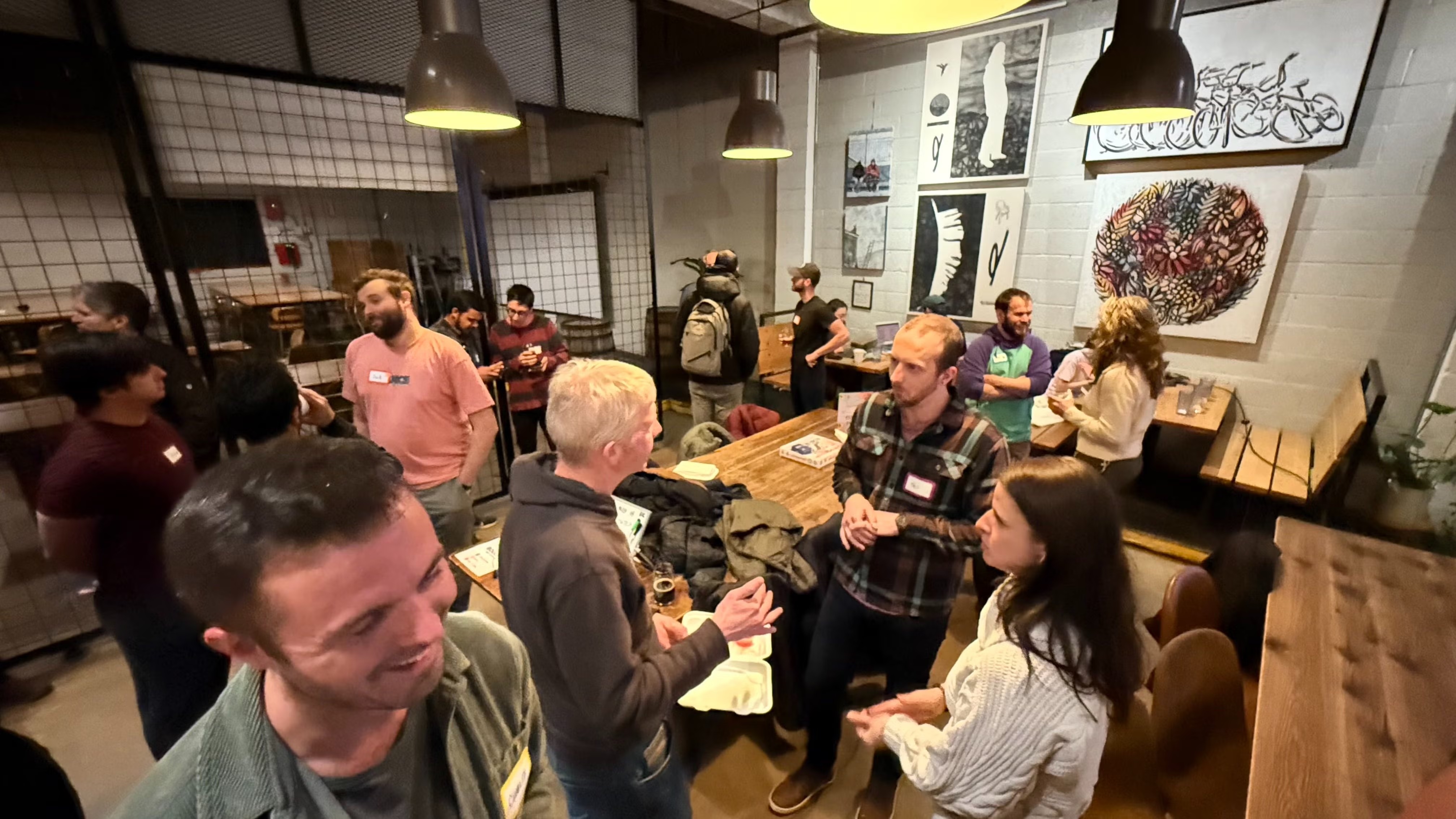
| 5:30–6:00 | Networking, food & drinks available for purchase |
| 6:00–7:00 | Presentation |
| 7:00–7:30 | Additional Q&A and networking |
Description
While quantum technology has existed for decades, there has been a substantial increase in funding and visibility over the last decade. This rapid progress has put stringent demands on the electronics required to control and manipulate qubits. Whether for fault-tolerant quantum computing or large-scale quantum networks, the increase in scale requires precise control and synchronization between instruments.
To address this issue, field-programmable gate arrays (FPGAs) are becoming ubiquitous in large-scale quantum systems. Due to their real-time signal processing ability, FPGAs excel as hubs of measurement and improve speed and reliability. Moreover, they make excellent choices for active feedback due to low latency and responsiveness, allowing them to operate within a qubit’s decoherence time. While historically limited by sampling rate and resource allocation, FPGA technology has rapidly improved, offering deterministic timing, low-latency and parallel processing. At the same time, FPGA development requires a niche skillset, which can sometimes limit their ability to deploy at scale.
In this talk we discuss the requirements for quantum control, the advantages and challenges of implementing FPGAs in quantum control electronics, and the various methods taken by the existing commercial and open-source landscape. Lastly, we talk about how Liquid Instruments is addressing these challenges through the FPGA-based Moku device, including giving users access to AI-enabled FPGA development.
Speaker
Dr. Jason Ball is a quantum applications engineer at Liquid Instruments, where he focuses on quantum physics, particularly quantum optics, sensing, and computing. He holds a Ph.D. in physics from the Okinawa Institute of Science and Technology and has a comprehensive background in both research and industry, including hands-on experience with superconducting and solid-state qubits, as well as microwave/RF instrumentation and low-temperature systems.
More like this near Boulder


Also on in Boulder
- Women&TECH Boulder Morning Coffee + NetworkingSun 1 Nov · 10am · Rayback Collective
- All Women's Networking & Community Event + Guest SpeakerTue 3 Nov · East & Co.
- Wellness Wednesdays - Boulder's Health & Wellness Practitioner Networking!Wed 4 Nov · 12pm · Boulder Healing Hub
- Wood CNC Router Training: Learn to ShopBot!Wed 4 Nov · 5:30pm · Solid State Depot
- Boulder Tech Connect Monthly Happy HourWed 4 Nov · 6pm · Rayback Collective
Going to FPGA-based hardware for quantum control and? Ask me anything about it.
I read the organiser's pages and answer in a few seconds.
Answers are AI-generated · Privacy