


Mathematical Biology Seminar
Downloads an .ics file · Times are in America/New_York · Google Calendar
Other dates
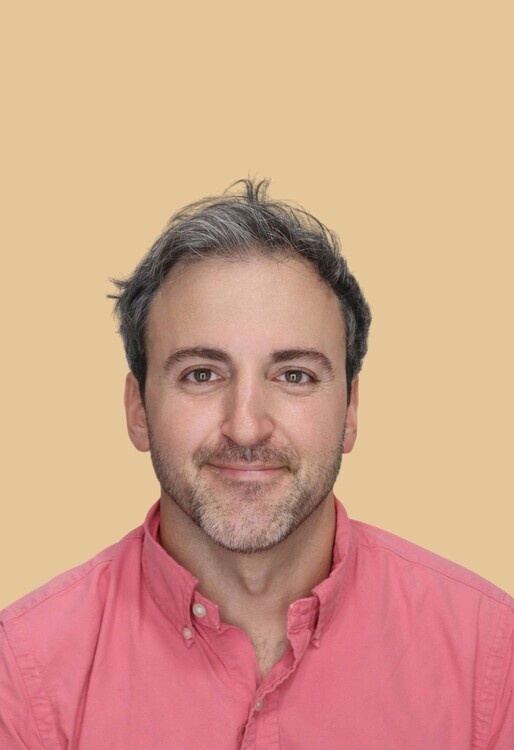
Speaker: Jordan Brown, Assistant Prof. Belmont University
Title: Modeling Transcatheter Aortic Valve Replacement in Patient-Specific Anatomy
Areas of talk: computational heart modeling, fluid-structure interaction, biomedical device models
Abstract: In response to the growing prevalence of valvular heart disease, the annual number of aortic valve replacements is expected to exceed 850,000 by 2050. Transcatheter aortic valve replacement (TAVR) is the implantation of an artificial aortic heart valve mounted on a stent without an open-heart surgery. TAVR is now the most common type of aortic valve replacement,and its use continues to accelerate. Computer modeling and simulation is an emerging tool in the process of transcatheter aortic valve (TAV) design, in obtaining regulatory approval, and inaiding clinicians’ decisions in the care of individual patients. Since there are still many open questions surrounding post-implantation complications of TAVR, improved computational models beyond those in the existing literature have the ability to provide more accurate performance predictions for individual patients. This talk will present computational fluid-structure interaction models of TAVs using the immersed finite element-difference method, a finite-element extension of the immersed boundary method. We perform dynamic simulations of crimping and deployment of the devices as well as of their behavior across the cardiac cycle in a patient-specific aortic-root anatomy reconstructed from CT image data. These IFED simulations incorporate biomechanics models fit to experimental tensile test data and automatically capture the contact within the devices and between the stents and native anatomies. We apply physiological driving and loading conditions based on clinical measurements of human ventricular and aortic pressures and flow rates, and our models provide informative clinical performance predictions, such as pre- and post-procedure transvalvular pressure differences, detailed velocity fields, leaflet dynamics, valve orifice areas, and regurgitation fractions. These insights provide a unique foundation for optimizing device design and deployment strategies, ultimately advancing the goal of improved long-term TAVR outcomes.
More like this near Knoxville




Going to Mathematical Biology Seminar? Ask me anything about it.
I read the organiser's pages and answer in a few seconds.
Answers are AI-generated · Privacy